
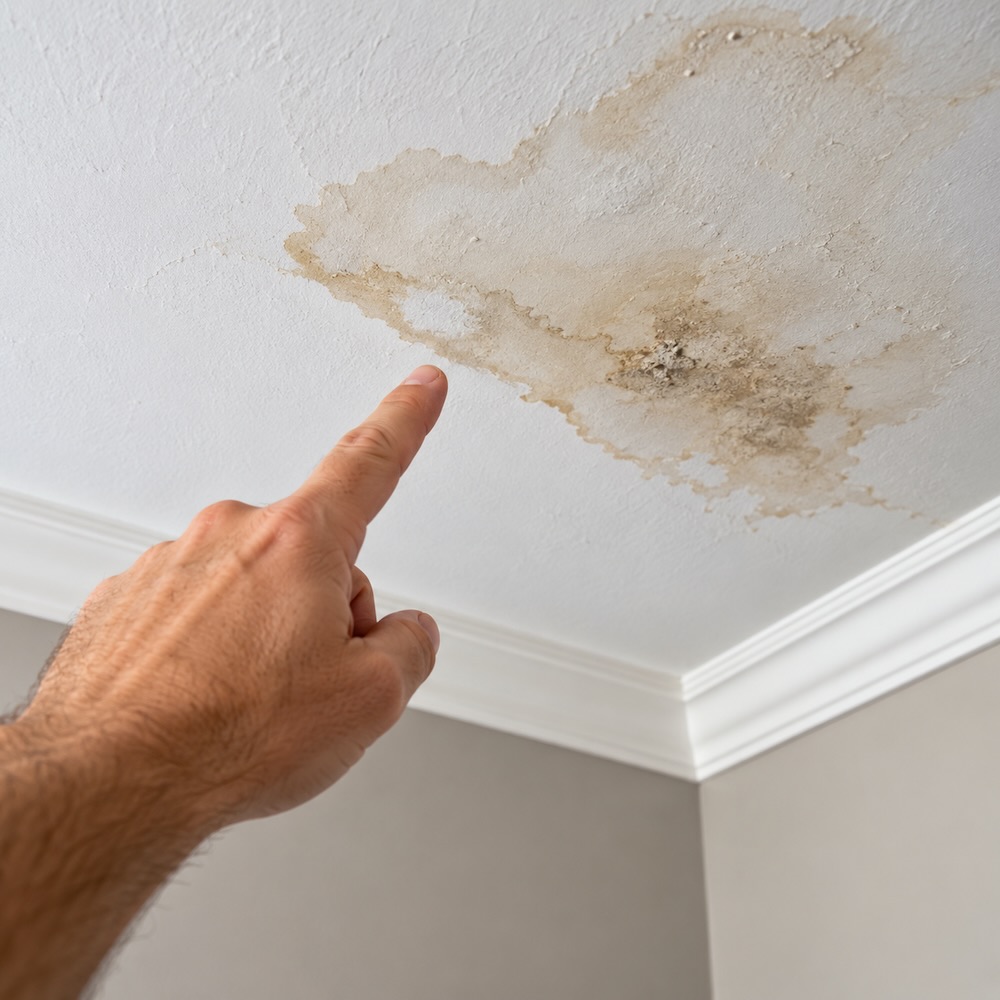
Not every leaking roof results in water dripping from the ceiling.
In many cases, a roof can let in small amounts of water for weeks or months before the problem becomes obvious. Knowing the early warning signs can help you deal with the cause before it leads to more serious damage.
Here are seven things to look out for.
1. Damp patches on ceilings or walls
Brown, yellow or dark patches on a ceiling are among the most common signs of water getting into a property.
Don’t assume the problem is directly above the stain. Water can travel along roof timbers and other surfaces before becoming visible.
Any unexplained damp patch deserves further investigation.
2. Water stains in your loft
Your loft can reveal a roof problem before it becomes visible elsewhere in your home.
Check the underside of the roof, particularly after heavy rain.
Look for dark patches, staining or areas that appear noticeably damp.
3. Damp roof timbers
Roof timbers should be dry.
Timber that looks darker than surrounding areas or feels damp may indicate that water is getting through the roof covering.
Persistent moisture can eventually cause timber to deteriorate or rot.
4. Mould or a musty smell
Mould and persistent musty smells can indicate excess moisture.
Although condensation can also cause these problems, a roof leak should be ruled out — particularly if the issue appears after rainfall or is concentrated in one area.
5. Peeling paint or wallpaper
Water entering through a roof can eventually make its way into walls and ceilings.
Bubbling paint, peeling wallpaper or damaged plaster on an upper floor can therefore be an early warning sign of water ingress.
6. Daylight visible from inside the loft
If you can see daylight coming through part of your roof where it shouldn’t, water may be able to find the same route inside.
Gaps can be caused by slipped or missing slates, damaged tiles or deterioration elsewhere in the roof.
Do not attempt to investigate by climbing onto the roof yourself.
7. Visible damage outside
Some leaks can be traced to obvious external damage.
From ground level, look for:
- Missing or slipped tiles or slates
- Damaged ridge tiles
- Loose or damaged flashing
- Debris on the roof
- Damaged gutters or roofline
- Anything that appears out of position
Strong winds and storms can cause relatively small defects that allow water into the roof.
Don’t ignore a small leak
A small roof leak can become a much bigger problem if it is left untreated.
Water can damage insulation, plasterwork, electrical fittings and roof timbers. Moisture can also encourage mould and timber decay.
The longer water is allowed to enter the property, the more extensive the eventual repair may become.
What should you do if you spot a warning sign?
First, don’t climb onto the roof yourself.
Roof surfaces can be particularly dangerous during wet, icy or windy weather.
Instead, arrange for the roof to be professionally inspected so that the source of the problem can be identified.
Concerned about your roof?
Taylor Roofs can carry out a comprehensive roof survey, identify any problems and explain what action – if any – is required.
Finding a small problem now could prevent a much larger repair later.